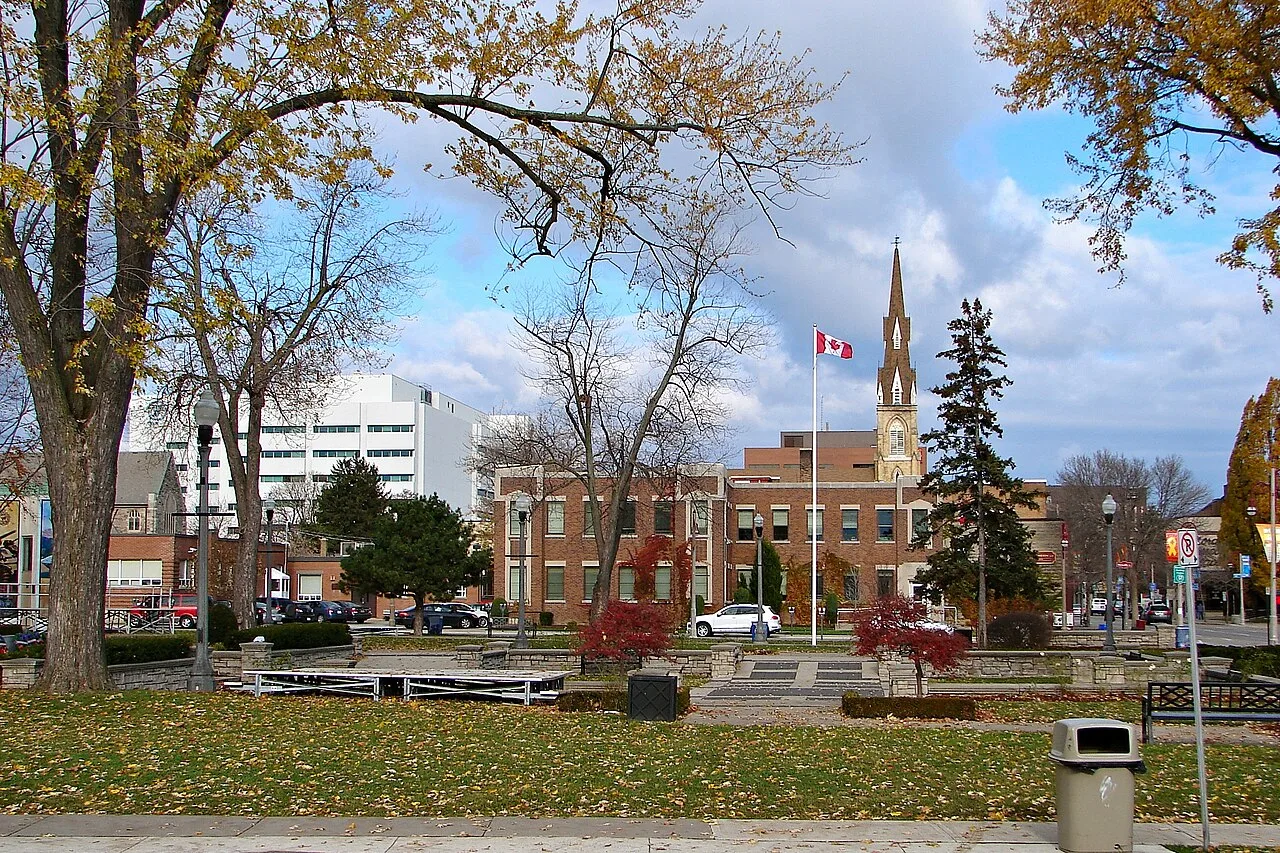
Overview
Oshawa is a city located in the province of Ontario, Canada. It is situated on the shoreline of Lake Ontario, placing it within the Southern Ontario region. The city serves as the largest municipality within the Regional Municipality of Durham. Geographically, Oshawa is positioned approximately 60 kilometres (37 mi) east of downtown Toronto. Due to this proximity and its size, the city is commonly viewed as the eastern anchor of the Greater Toronto Area. It also holds this anchoring status within the Golden Horseshoe, a heavily populated and industrialized region surrounding the western end of Lake Ontario.
The name Oshawa has Indigenous origins, deriving from the Ojibwa term aazhawe. This term translates to "the crossing place" or simply "a cross," reflecting the historical significance of the location for travel and trade routes. The city operates under the time zone America/Toronto. The official languages of the municipality are English and French, consistent with the bilingual status of the province of Ontario.
As of the 2021 census, the population of Oshawa was 175,383. The city covers a total area of 145.72 square kilometres. These figures establish Oshawa as a significant urban center within the Regional Municipality of Durham, contributing substantially to the demographic and geographic profile of the area. The city's location on the Lake Ontario shoreline influences its local geography and urban development patterns.
Administrative Context
Oshawa functions as a key administrative unit within the Regional Municipality of Durham. As the largest municipality in this regional division, it plays a central role in the local governance and economic structure of the area. The city's status as the eastern anchor of the Greater Toronto Area highlights its importance in the broader metropolitan context. This position connects Oshawa to the wider economic and transportation networks that define the Golden Horseshoe region.
The city's coordinates are 43.9° N, 78.85° W. These coordinates place Oshawa firmly within the southern tier of Ontario, close to the international border with the United States, although the border itself is not directly adjacent to the city limits. The proximity to Toronto facilitates commuter patterns and economic integration, making Oshawa a notable destination for residents and businesses seeking connection to the larger metropolitan economy.
Did you know: The name Oshawa comes from the Ojibwa word aazhawe, meaning "the crossing place," highlighting the area's historical role as a key transit point along the Lake Ontario shoreline.
History
Indigenous Origins and Early Settlement
The name Oshawa originates from the Ojibwa term aazhawe, which translates to "the crossing place" or simply "a cross." This etymology reflects the area's early significance as a meeting point for Indigenous peoples, particularly the Ojibwa, who utilized the Lake Ontario shoreline for trade and travel. The region's geography, situated on the Lake Ontario shoreline, provided natural routes that facilitated the early fur trade, establishing the area as a strategic location long before European settlement expanded significantly into Southern Ontario.
Industrial Growth and the Automotive Era
Oshawa's development was heavily influenced by its location within the Golden Horseshoe, a densely populated region in Southern Ontario. It is commonly viewed as the eastern anchor of the Greater Toronto Area, a position that has shaped its economic and demographic trajectory. The city lies approximately 60 kilometres (37 mi) east of downtown Toronto, a proximity that allowed it to integrate closely with the broader metropolitan economy. As the largest municipality in the Regional Municipality of Durham, Oshawa became a central hub for industrial activity, most notably in the automotive sector. The rise of the automotive industry transformed the city from a small lakeside settlement into a major manufacturing center, drawing workers and businesses to the area.
The 1937 Strike
A defining moment in Oshawa's industrial history was the 1937 strike. This event highlighted the growing power of the labor movement within the city's automotive plants and had lasting effects on worker relations and municipal development. The strike underscored the importance of the automotive industry to Oshawa's identity and economy, cementing its reputation as a key player in Canada's manufacturing landscape. The legacy of this period continues to influence the city's industrial heritage and its role within the Regional Municipality of Durham.
Demographics
The 2021 Census recorded a population of 175,383 for the city of Oshawa. This figure represents the official count for the municipality within the Regional Municipality of Durham in Ontario. The city covers a total land area of 145.72 square kilometres, resulting in a population density that reflects its status as the largest municipality in the Durham region. As a significant urban centre on the Lake Ontario shoreline, Oshawa serves as a key demographic hub in Southern Ontario.
Language is a defining characteristic of the city's demographic profile. The official languages of Oshawa are English and French. English remains the dominant language for daily communication, commerce, and administration, reflecting the broader linguistic trends of the province of Ontario. French holds official status, ensuring bilingual services and recognition within the municipal framework. The presence of these two official languages influences local governance, education, and cultural institutions throughout the city.
The name Oshawa originates from the Ojibwa term aazhawe, which translates to "the crossing place" or simply "a cross". This etymological root highlights the historical significance of the location as a meeting point or junction, a feature that has influenced settlement patterns and demographic growth over time. The Ojibwa heritage is part of the broader Indigenous history of the region, contributing to the cultural landscape of the city.
Oshawa is commonly viewed as the eastern anchor of the Greater Toronto Area and of the Golden Horseshoe. This geographic positioning influences migration patterns and demographic composition, as residents often commute to or from the larger metropolitan centre. The city lies approximately 60 kilometres east of downtown Toronto, a distance that facilitates economic and social integration with the surrounding urban region. This proximity to Toronto affects housing markets, employment opportunities, and the diversity of the population.
Demographic data from the 2021 Census provides a snapshot of the city's composition, including language, religion, and ethnicity. While specific percentages for religious affiliation and ethnic groups are detailed in the full census reports, the overall population count of 175,383 serves as the baseline for these statistical analyses. The city's role as a major municipality in the Durham region underscores its importance in regional demographic studies.
Did you know: The name Oshawa comes from the Ojibwa word aazhawe, meaning "the crossing place".
Economy
Oshawa's economic history is inextricably linked to the automotive industry, a sector that has defined the city's industrial landscape for over a century. The city is widely recognized as the historic home of General Motors in Canada, a relationship that has shaped local employment patterns, urban development, and the broader economic structure of the Regional Municipality of Durham. As the largest municipality within this regional division, Oshawa serves as a significant economic hub for Southern Ontario, leveraging its position on the Lake Ontario shoreline and its proximity to the Greater Toronto Area to attract diverse commercial interests.
Automotive Heritage and Industrial Base
The presence of General Motors has been the cornerstone of Oshawa's industrial economy. The city's identity as an automotive center is rooted in the long-standing operations of the manufacturer, which established Oshawa as a critical node in the North American supply chain. This industrial base has supported a wide range of ancillary businesses, including parts suppliers, logistics firms, and engineering services. The automotive sector has historically provided stable employment for a significant portion of the local workforce, influencing the demographic and socioeconomic profile of the city. The economic impact extends beyond direct manufacturing jobs, affecting retail, housing, and service sectors that cater to the industrial workforce and their families.
Diversification: Education and Health Sciences
In recent decades, Oshawa has pursued economic diversification to reduce reliance on the cyclical nature of the automotive market. The education sector has emerged as a key driver of growth, with local institutions contributing to the knowledge economy. These institutions attract students and faculty from across the province and beyond, fostering a vibrant academic environment that supports research, innovation, and student spending. The health sciences sector has also gained prominence, with hospitals, clinics, and research facilities playing an increasingly important role in local employment and service delivery. This shift towards a more diversified economic base aims to enhance resilience and create new opportunities for residents, complementing the traditional industrial strengths of the city.
Regional Economic Context
As part of the Golden Horseshoe, one of the most densely populated and economically active regions in Canada, Oshawa benefits from its integration into a larger metropolitan economy. The city's location approximately 60 kilometres east of downtown Toronto facilitates commuting and trade, linking Oshawa to the broader labor and consumer markets of the Greater Toronto Area. This regional connectivity supports business expansion and allows for the flow of goods, services, and talent. The city's status as the eastern anchor of this region underscores its strategic importance in the provincial and national economic landscape. The combination of industrial heritage, educational institutions, and regional connectivity positions Oshawa as a dynamic and evolving economic center within Ontario.
What is Oshawa known for?
Notable Attractions and Cultural Landmarks
Oshawa offers several notable attractions that reflect its geographic setting and historical significance. The city is situated on the shoreline of Lake Ontario, providing residents and visitors with direct access to the water. This location supports various recreational activities and scenic views along the coast. The city is the largest municipality in the Regional Municipality of Durham, serving as a key urban center in Southern Ontario. Its position approximately 60 kilometres east of downtown Toronto makes it a significant part of the Greater Toronto Area and the Golden Horseshoe region. This proximity to Toronto influences the local culture and economy, drawing visitors from the broader metropolitan area.
This etymology reflects the historical importance of the area as a meeting point for Indigenous peoples. The city's cultural heritage is preserved through various landmarks and institutions. One of the most prominent cultural sites is the Canadian Automotive Museum. This museum highlights the city's long-standing connection to the automotive industry, showcasing vehicles and artifacts that document the evolution of car manufacturing in Canada. The museum serves as an educational resource for students, historians, and car enthusiasts, providing insights into the industrial history of the region.
Another significant landmark is Parkwood Estate. This historic property is known for its architectural beauty and historical significance. It serves as a venue for cultural events and tours, offering visitors a glimpse into the past. The estate's grounds and buildings provide a peaceful retreat from the urban environment, making it a popular destination for those interested in history and architecture. The city also features various parks and green spaces that enhance the quality of life for residents. These areas provide opportunities for outdoor recreation and community gatherings, contributing to the city's appeal as a place to live and visit.
Oshawa's cultural landscape is further enriched by its official languages, English and French. This bilingual status reflects the diverse population and historical influences in the region. The city's location in the Regional Municipality of Durham places it within a network of communities that share cultural and economic ties. The combination of natural beauty, historical landmarks, and cultural institutions makes Oshawa a destination of interest for travelers and geographers. The city's role as the eastern anchor of the Greater Toronto Area underscores its importance in the regional context, offering a blend of urban amenities and natural surroundings.
Transportation
Highways and Road Networks
Oshawa serves as a critical transportation node within the Regional Municipality of Durham and the broader Southern Ontario corridor. As the largest municipality in the region, its road infrastructure supports significant commuter traffic flowing between the city and downtown Toronto, located approximately 60 kilometres to the west. The city's position on the Lake Ontario shoreline influences its grid layout and major arterial routes, which facilitate access to the waterfront and industrial zones. The highway network connects Oshawa to the eastern anchor of the Greater Toronto Area and the Golden Horseshoe, ensuring seamless integration with regional economic hubs. Major highways traverse the municipality, providing direct links to neighboring communities and supporting the daily movement of goods and passengers. The strategic location of these roads underscores Oshawa's role in the regional transit system, accommodating both local residents and through-traffic from the wider metropolitan area.
Rail Services
Rail transport in Oshawa is a cornerstone of regional mobility, with services provided by both GO Transit and Via Rail. These operators utilize the main line that runs through the city, connecting it to Toronto and other key destinations in Ontario. GO Transit offers frequent commuter rail services, catering primarily to daily workers traveling to and from the downtown core. The frequency and capacity of these trains reflect the high volume of commuters who rely on rail as a primary mode of transport. Via Rail provides intercity passenger service, linking Oshawa to broader provincial and national networks. The rail infrastructure supports the city's status as a major population center within the Regional Municipality of Durham, offering an alternative to highway congestion. The integration of rail services with local transit options enhances accessibility for residents, contributing to the efficiency of the regional transportation system.
Port of Oshawa
The Port of Oshawa leverages the city's location on the Lake Ontario shoreline to facilitate maritime transport and trade. As a key feature of the city's geography, the port supports various economic activities, including the movement of bulk goods and industrial materials. The waterfront area is integral to the city's identity, reflecting the historical significance of the name Oshawa, which originates from the Ojibwa term aazhawe, meaning "the crossing place." The port's operations are closely tied to the surrounding industrial zones, providing logistical support for local businesses and regional supply chains. The accessibility of the port via road and rail networks enhances its utility, allowing for efficient transfer of cargo between different modes of transport. This multimodal connectivity reinforces Oshawa's position as a vital link in the transportation infrastructure of Southern Ontario.
Administration and Infrastructure
Local Government Structure
Oshawa operates as the largest municipality within the Regional Municipality of Durham, a second-level administrative subdivision in the province of Ontario. As a city, it functions under the standard municipal framework established by Ontario provincial legislation, which typically involves a mayor and a council of ward representatives responsible for local bylaws, zoning, and service delivery. The city's status as the eastern anchor of the Greater Toronto Area and the Golden Horseshoe influences its regional planning and infrastructure coordination, although it maintains distinct municipal governance separate from the regional authority. The Regional Municipality of Durham oversees broader services such as policing, public transit, and waste management, while the City of Oshawa manages local amenities including parks, libraries, and urban development. This dual-layer administration is common in Southern Ontario, where regional municipalities were created to streamline services across multiple towns and villages.
Healthcare and Education
The city supports a network of healthcare facilities and educational institutions serving its population of 175,383, as recorded in the 2021 census. Healthcare services are provided through local hospitals and clinics, which cater to the diverse demographic needs of the community. While specific hospital names are not detailed in the primary grounding data, the city's size and status as a regional hub necessitate a robust medical infrastructure, including emergency care and specialized treatments. Educational opportunities range from public and Catholic school boards to post-secondary institutions. The presence of universities and colleges in Oshawa contributes to the local economy and provides higher education options for residents, particularly in fields related to engineering and technology, reflecting the city's historical industrial base. These institutions play a significant role in attracting students and fostering research and development within the municipality.
Media Outlets
Oshawa is served by various media outlets that provide local news, sports coverage, and community updates. These include daily newspapers, radio stations, and television channels that broadcast to the city and the wider Durham Region. The media landscape in Oshawa reflects the city's position as a key urban center in Southern Ontario, offering residents access to both local and regional news. Local newspapers often focus on municipal politics, school board decisions, and community events, while radio and television stations provide a mix of entertainment, sports, and news programming. The availability of diverse media sources helps keep the population informed about local issues and regional developments, contributing to civic engagement and community cohesion. The city's media outlets also play a role in highlighting the cultural and historical significance of Oshawa, including its origins from the Ojibwa term "aazhawe," meaning "the crossing place."